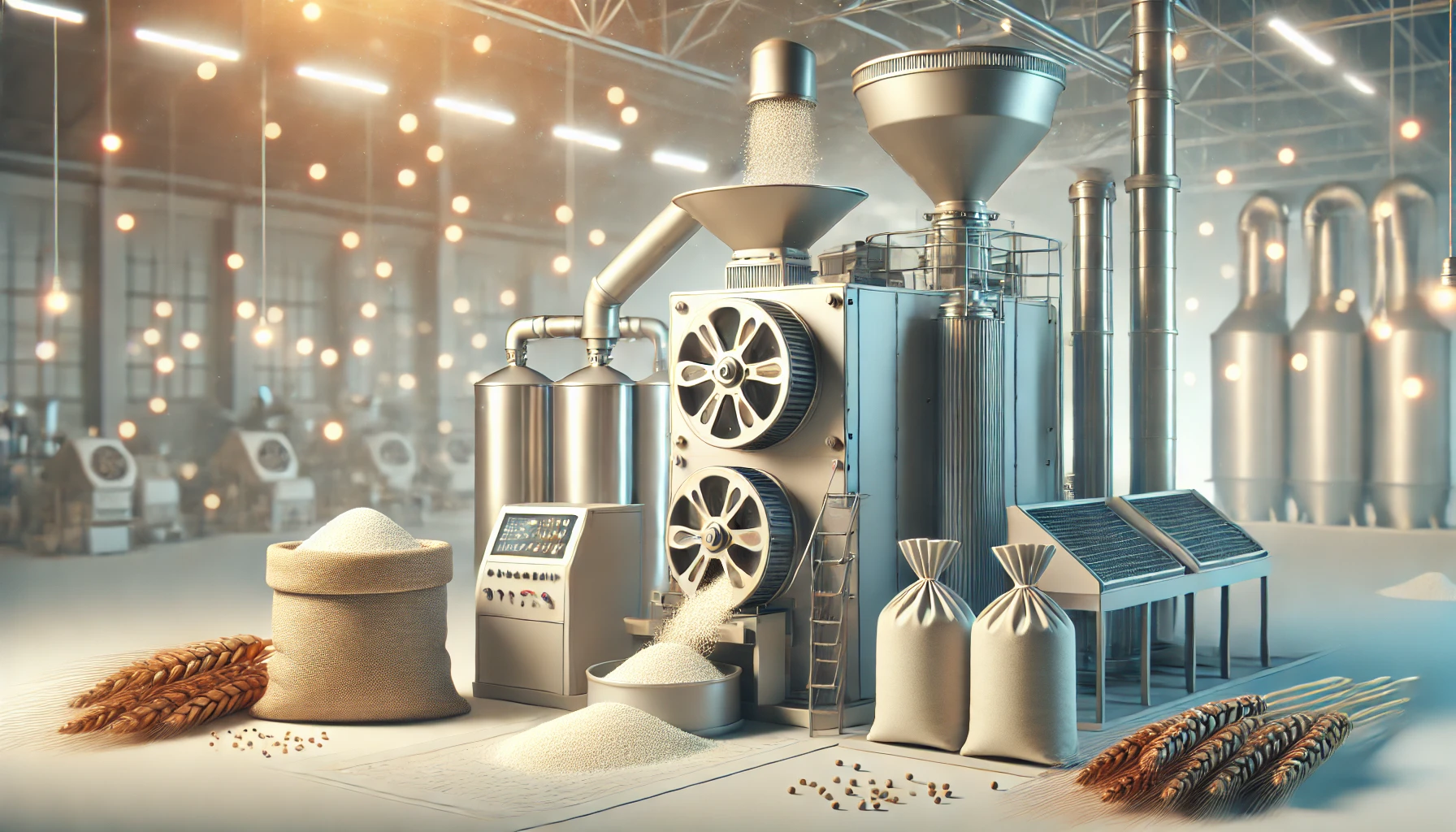
In today’s world of rapid technological advancement, the flour milling industry has transformed considerably. From small-scale, home-based setups to vast industrial operations, flour milling machines have become a crucial component for converting grains into flour efficiently. Whether you’re setting up a new flour mill plant or upgrading your existing setup, understanding the various types of flour milling machines, their features, and industrial applications can help you make the best choice for your needs.
Let’s dive deep into the world of flour milling machinery, from general-purpose flour milling machines to the most efficient industrial flour mill options.
What is a Flour Milling Machine?
Flour milling machines are specialized equipment designed to grind grains like wheat, maize, and rice into flour. These machines come in various types and capacities, catering to a wide range of industrial and commercial needs. A standard flour milling machine is equipped with grinding mechanisms that transform whole grains into fine flour. The purpose is to increase the efficiency and quality of flour production, which is essential in both small-scale and industrial flour milling applications.
Whether you’re looking at a compact flour milling machine or a large industrial flour mill, these machines are built with precision to produce quality flour with minimal waste.
Types of Flour Milling Machines
1. Automatic Flour Mill
Automatic flour mills are highly efficient and require minimal manual intervention, making them a popular choice for large-scale flour production. Equipped with advanced automation, these machines ensure consistent quality by controlling every aspect of the milling process, from grain input to flour output.
Key Features of Automatic Flour Mills:
- Automation reduces the need for constant supervision.
- Capable of producing large quantities of flour efficiently.
- Built-in systems to monitor grinding quality and machine wear.
Best for: Large-scale flour mills and industrial setups looking for high efficiency and output.
2. Small Scale Flour Mill
Small-scale flour mills are ideal for home-based businesses, small bakeries, or new entrepreneurs. These machines are compact, cost-effective, and easy to operate, making them accessible to small business owners.
Key Features of Small-Scale Flour Mills:
- Require minimal space and are easy to set up.
- Often equipped with simple-to-use controls for beginners.
- Economical, making them affordable for small businesses.
Best for: Home use, small bakeries, and startups aiming to produce fresh flour in limited quantities.
3. Industrial Flour Mill
Industrial flour mills are robust machines designed for large-scale flour production. Built with durability and efficiency in mind, these machines can process vast amounts of grain daily, making them suitable for large production units.
Key Features of Industrial Flour Mills:
- Heavy-duty construction to handle high production volumes.
- Advanced mechanisms for fine, uniform flour production.
- Often include features like rollers, purifiers, and sifters to ensure product quality.
Best for: Large factories and commercial flour producers looking for high production capacity and efficiency.
For those interested in more details on different flour milling machines, Naeem Mill Store offers a wide variety of machines catering to diverse flour milling needs. You can explore more here: Naeem Mill Store.
Essential Flour Milling Equipment and Accessories
No flour milling setup is complete without the necessary support equipment. Here are some key pieces of flour mill equipment that enhance the milling process:
- Roller Mills: Used primarily in large-scale industrial flour mills, roller mills crush and grind grains efficiently. They consist of steel rollers that flatten and grind the grains to produce uniform flour.
- Plansifters: Plansifters are essential for separating flour based on particle size, ensuring a smooth, fine consistency.
- Purifiers: This equipment is used to refine flour by removing bran and impurities, thus enhancing the final product quality.
- Wheat Dampeners and Conditioners: These are used to moisten the wheat before grinding, which aids in softening the bran and ensures a smoother grind.
Choosing the Right Flour Milling Machine for Your Needs
When selecting a flour milling machine, it’s essential to consider your production requirements, budget, and space constraints. Here’s a quick guide:
- Evaluate Production Needs: If you need high daily output, an industrial flour mill is your best choice. However, if you’re aiming for smaller batches, a small-scale flour mill may be more suitable.
- Consider Automation: An automatic flour mill is beneficial if you require consistent quality with minimal oversight, ideal for both large and small milling setups.
- Look for Versatility: Machines that accommodate different grains (such as wheat and maize) can increase your operation’s flexibility and product range.
Applications of Flour Milling Machinery
Flour milling machines are critical to industries far beyond just bread-making. Here’s a breakdown of some common industrial applications of flour mills:
- Food Production: Flour is a primary ingredient in baked goods, pasta, and many processed foods. Thus, flour mills are essential to food production companies globally.
- Agricultural Processing: Farmers and agricultural companies use flour mills to process wheat, maize, and other grains into flour as an additional revenue stream.
- Breweries and Distilleries: Ground grains are vital in beer and spirits production. Flour mills help in grinding the grains to an optimal size for fermentation.
- Animal Feed Production: Crushed grains are often used in animal feed. Some flour mills are versatile enough to produce both flour for human consumption and coarser grain products for animal feed.
Advantages of Investing in an Industrial Flour Mill
Industrial flour mills offer numerous advantages for businesses aiming for high output and quality. Here are some benefits:
- High Productivity: Industrial mills are designed to process large amounts of grain, making them ideal for large-scale production.
- Enhanced Quality Control: With features like purifiers and plansifters, these machines ensure the final product meets high standards.
- Cost Efficiency: While the initial investment is higher, the efficiency and output of an industrial flour mill can lead to significant cost savings over time.
- Durability: Built with heavy-duty materials, these machines are designed to last, making them a long-term asset for any business.
For further reading on the latest flour milling equipment, the ABC Machinery Guide on Flour Milling offers comprehensive insights into various types and functionalities of flour milling machines.
Conclusion: Flour Milling Machinery – Choosing the Best for Your Business
Investing in the right flour milling machinery can transform your production capacity, whether you’re running a small-scale operation or a large industrial setup. From automatic flour mills to industrial flour mill options, each type serves a specific need in the market.
If you’re just starting, a small-scale flour mill or mini flour mill might be an excellent choice to test the waters. For larger businesses, industrial flour mills with advanced flour mill equipment provide the reliability and efficiency necessary to meet market demands.
Choosing the right equipment depends on careful planning and understanding your production goals. By aligning your investment with your operational needs, you can ensure a smooth, efficient, and profitable flour milling process.
For those interested in exploring a range of flour milling machines, from compact models to large industrial machines, Naeem Mill Store offers a wide variety of high-quality equipment to fit diverse milling requirements.